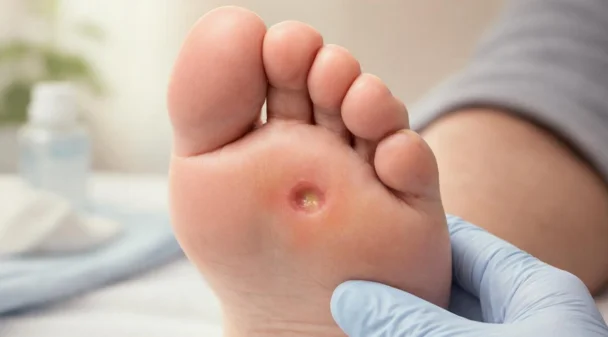
Advanced Diabetic Foot Ulcer & Wound Care
What is a Diabetic Foot Ulcer?
A diabetic foot ulcer is an open sore or wound that occurs in approximately 15 percent of patients with diabetes and is commonly located on the bottom of the foot. Ulcers form due to a combination of factors such as lack of feeling in the foot, poor circulation, foot deformities, irritation, and trauma.
How Do Foot Wounds Develop?


For people with diabetes, nerve damage (neuropathy) can mean a small cut or blister goes unnoticed. Poor circulation slows the healing process, allowing a minor injury to develop into a serious ulcer.
Signs of a Developing Foot Ulcer

- Any drainage from your foot that might stain your socks or leak out in your shoe.
- Unusual swelling, irritation, redness, or odors from one or both feet.
- Black tissue (called eschar) surrounding the wound, which forms because of a lack of healthy blood flow.
- Numbness or loss of feeling in the feet or toes.
When to Seek Immediate Medical Care
- You have diabetes and discover any break in the skin.
- You notice any new swelling, redness, or drainage.
- The wound is getting larger or has a foul-smelling odor.
- You experience fever or chills in conjunction with a wound.
All ulcers and non-healing wounds should be seen by a podiatrist immediately. Early and aggressive treatment is the key to preventing serious complications like infection and amputation.
The Danger of Painless Wounds
Why You Might Not Feel It
Diabetic neuropathy can cause a complete loss of feeling in your feet. Because of this, you may not feel pain from a cut, blister, or even a serious ulcer. That's why daily foot inspections are critical for anyone with diabetes.
Patient Experience
"I didn't even know I had a problem until I saw drainage in my sock. I couldn't feel a thing, but Dr. Marzano showed me how serious it was."
With proper care and advanced treatments, the majority of diabetic foot ulcers can be healed, preserving limbs and preventing infection.
Our Advanced Approach to Wound Care
Treatment involves a multi-faceted approach. We focus on off-loading (relieving pressure), debridement (removing non-viable tissue), applying advanced medications and dressings, and managing blood sugar. Our goal is to close the wound as quickly as possible.
Dr. Marzano may use advanced modalities like skin substitute grafts and hyperbaric oxygen therapy to stimulate your body's natural healing processes and achieve a successful outcome.

Articles from Dr. Marzano
- The Benefits of Home Wound Care: Why It Matters for Your Recovery
Discover the key benefits of receiving wound care at home, from comfort and convenience to better healing outcomes. Learn why Dr. Marzano's home wound care service is transforming patient recovery in Scarsdale and Westchester.
- Why I Bring Sardines to My Wound Care Patients
Learn why Dr. Marzano brings sardines to his wound care patients and how this simple nutritional intervention can support wound healing. Discover the benefits of sardines for diabetic foot ulcers and tissue repair.
- Is Hyperbaric Oxygen Worth It for Wounds?
Dr. Marzano discusses the risks, benefits, and real-world value of hyperbaric oxygen therapy for wound healing, especially in diabetic foot ulcers. Learn how it works and when it is appropriate.
- What is Negative Pressure Wound Therapy?
Dr. Marzano explains negative pressure wound therapy (VAC therapy), how it works, its benefits, and where it fits in the wound care treatment plan. Learn about suction devices and their role in healing.
Protect Your Feet. Protect Your Future.
Don't wait to seek treatment for a foot wound. Contact Westchester Podiatric Medicine for an urgent appointment to get the expert care you need.